
Start with three classics, then branch out
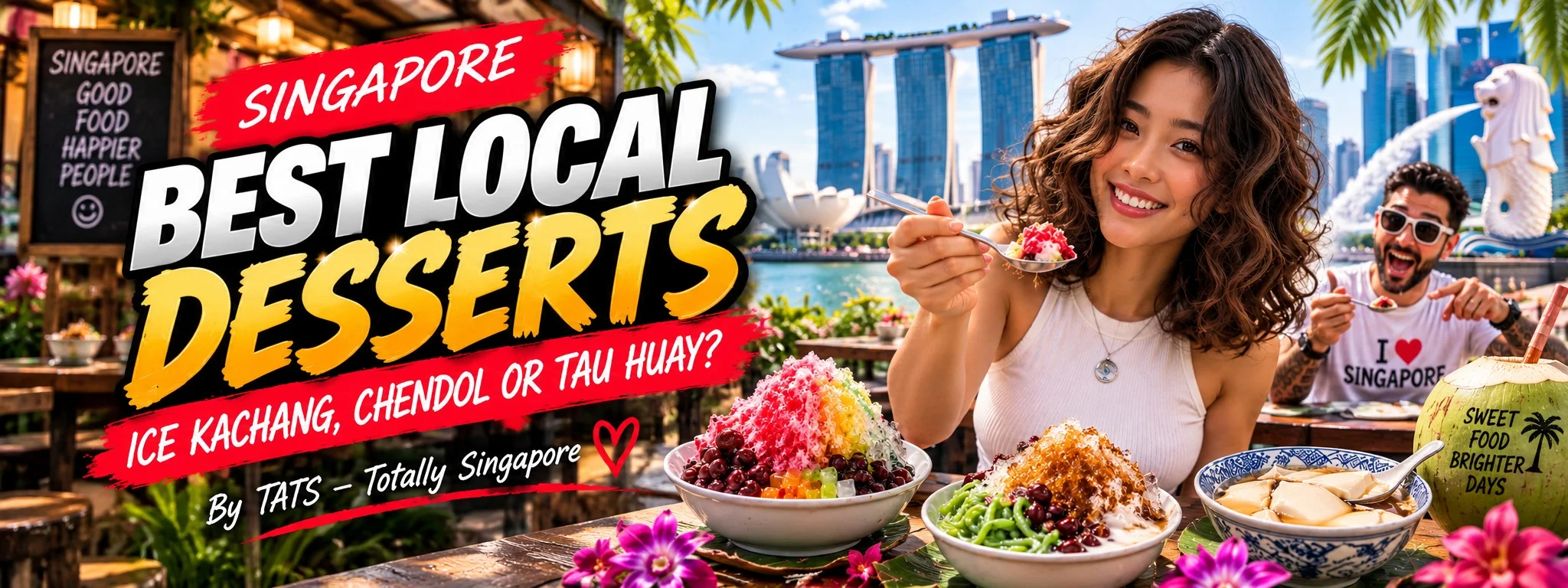
If you only have one dessert stop, a shaved-ice bowl makes sense in Singapore’s heat. If you have several meals, rotate styles instead: ice kachang for maximal texture, chendol for coconut-and-palm-sugar depth, and tau huay when you want something softer and simpler. Those three are useful entry points, not a complete national dessert list.
Dessert culture overlaps hawker centres, kopitiams, specialist sweet shops, bakeries and different Chinese, Malay, Indian and Peranakan traditions. The fun is noticing how the same ingredients — pandan, coconut, beans, rice flour and gula melaka — appear in very different forms.
Ice kachang: the maximalist shaved-ice bowl
Ice kachang literally points back to ice and beans. Modern versions pile shaved ice over ingredients such as red beans, sweet corn, grass jelly, agar-agar and attap seeds, then add coloured syrups and often milk. National Museum/Roots material documents how hand-cranked ice-shaving machines helped transform older street ice treats into the cleaner shaved-ice style that became a Singapore mainstay.
Do not worry about eating it elegantly. Dig down as the ice melts so you get the beans and jellies with the syrup rather than finishing the ice first and discovering the entire dessert underneath.
Chendol: coconut, gula melaka and green jelly
Chendol is usually less visually chaotic than ice kachang but more aromatic: shaved ice, coconut milk, green rice-flour jelly and palm sugar are the core idea, with red beans or other additions depending on the stall. Good gula melaka gives a dark caramel depth that should taste more interesting than plain sweetness.
Spellings vary — chendol and cendol both appear — and versions across Southeast Asia differ. Treat the Singapore bowl you are eating as one local expression of a regional dessert rather than a recipe that every stall must reproduce identically.
Tau huay: the quiet counterpoint
Tau huay is soft soybean curd, usually served with a light sweet syrup and available warm or chilled. It is the dessert I would choose after a heavy hawker meal because it does not rely on a mountain of ice, pastry or toppings.
Texture matters more than decoration. Traditional-style bean curd should feel delicate and spoon-soft; modern shops may offer flavoured or set versions that are firmer. Both can be enjoyable, but they are different experiences.
The second wave: what else to look for
- Pulut hitam: black glutinous rice cooked into a thick sweet dessert, commonly paired with coconut milk.
- Tau suan: split mung beans in a sweet, slightly thick soup, often eaten with pieces of fried you tiao.
- Chin chow: grass jelly served as a cooling dessert or drink.
- Bubur cha cha: coconut-milk dessert with colourful pieces such as sweet potato, yam and chewy starch elements.
- Kueh: a huge family of bite-size cakes and sweets using rice or tapioca flours, coconut, pandan, palm sugar and other fillings — buy a mixed selection rather than pretending one piece represents the category.
Where to try desserts without chasing one famous stall
Most travellers can find a good first taste in a busy hawker centre or neighbourhood dessert shop. VisitSingapore’s local-dessert material notes that many classics are widely available in hawker centres, traditional dessert shops and local bakeries. That is useful because desserts are a poor reason to cross the whole island for a stall that may be closed.
I would pair dessert with where you are already eating: Chinatown for traditional sweet soups and pastries, Little India for Indian sweets after a meal, or a neighbourhood hawker centre for shaved ice. Then, if one style grabs you, seek out a specialist on another day.
How to order and share intelligently
Dessert stalls are usually straightforward: point to the item, choose hot/cold where offered, and ask about optional toppings if the menu makes them unclear. Sharing two or three contrasting bowls among a group is better than everyone ordering the same mountain of ice.
Sweetness can be intense, especially with syrups or palm sugar. Some stalls can reduce syrup, but not every component is made to order. If you prefer less sweetness, tau huay or a simpler kueh selection may suit you better than ordering a classic dessert and asking for half its identity to be removed.
Allergies and dietary assumptions
Coconut milk, dairy or condensed/evaporated milk, peanuts, sesame, eggs, wheat and different starches can appear across desserts. A bowl that looks plant-based is not automatically vegan, and a colourful jelly does not tell you its ingredients. If an allergy matters, ask the stall directly and be realistic about cross-contact in a busy hawker environment.
TATS Man verdict
The old page gave Singapore three desserts and 78 words. Start with those three, absolutely — but do not stop there. A few small dessert detours tell you almost as much about Singapore’s overlapping food cultures as another famous plate of noodles.
Sources checked 10 September 2026: Singapore Tourism Board local-dessert guide; National Heritage Board/Roots ice-kachang collection and Singapore food-history material.
Cheers, Carpe Diem & save room for the gula melaka! 🍻⏳🍧
TATS Man
The hawker-table optimist who treats dessert as a second itinerary, not an afterthought.